
RB

For family business leaders

Every business decision is also a family decision.

Private, one to one coaching for owners, successors, spouses who run the business together, and the leaders who work alongside them. These conversations are about how you lead the business, and how you lead the people you also go home to.

20+ years
coaching leaders
8,000+
paid coaching sessions
36 months
average engagement
6 companies
coached through exit

If any of this sounds familiar

Leaders in family businesses tell me versions of these in our first conversation.

Two people think they are in charge.

The founder handed over the title. Not the decisions. The team knows exactly who to go to when they want a different answer.

The successor nobody fully trusts yet.

You have been groomed for the seat for years. Some of the team still sees the founder's kid. You feel like you have to prove it every week.

A family member in the wrong seat.

Everyone can see it. Nobody can say it, because the conversation would not end at the office.

The fight that follows you home.

A disagreement in the leadership meeting becomes a cold Sunday dinner. A cold Sunday dinner becomes a slow Monday.

The outsiders you need to keep.

Your best non family executives wonder how far they can really go. Some of them have already started looking.

Running it with your spouse.

The hard conversations at work come home. The ones at home show up at work. Nobody else on the team knows which one they are in.

A seat bigger than your experience.

You stepped into a role the business needed filled. You are good at it in ways nobody sees yet, and you feel it in every meeting.

Equal is not the same as fair.

Ownership, pay, and contribution do not line up across the family. Everyone feels it. It never makes the agenda.

13%

of next generation family members strongly agree their family business would keep running smoothly if an important family member left, retired, or passed away. Among current leaders, 24%.

Source: Deloitte Private, The Enduring Family Business survey, 2024

What this is, and what it is not

What it is

  • Private, one to one, twice a month
  • About you as a leader: how you decide, delegate, and handle pressure
  • Built around the commitments you already made with your team

What it is not

  • Not family therapy or mediation, though we will talk about family when it matters to how you lead
  • Not consulting. I will not tell you how to run the business.

What we work on

The handoff.
What the founder still needs to let go of, what the successor still needs to take, and the conversation between them neither has had.
The hard conversation with family.
How to raise it, say it plainly, and keep the relationship.
Your own authority.
Leading people who knew you as a teenager, and leading a parent who still has the final say.
Pressure that does not stay at work.
What the role costs you at home, and what to do about it.
Two people at the top.
When a parent and a child, two siblings, or a married couple share the top of the company, every disagreement carries two histories. I work with each of you separately, and together only when you both ask.

An illustrative scenario

Illustrative scenario

A second generation CEO, $40 million distribution company

The situation. Three years into the CEO seat, with her father still chairman and in the office most days. Her brother runs operations and reports to her on paper. In practice, he takes his questions to their father. The leadership team meets every week. The same two priorities have slipped two quarters in a row.

What we worked on. The conversation with her father about what chairman means, written down. The conversation with her brother about his seat, held at work, not at the family table. How she shows up when her father overrules her in front of the team.

What changed. Decisions started landing with her. Her father moved to two days a week by choice. Her brother's role became a conversation the leadership team could have, instead of a family secret.
A composite example of common situations, not a specific client.

How it works

  1. 1

    The start.

    Onboarding interviews, a day watching you lead, and a clear look at the pressure on you and the business.

  2. 2

    The work.

    Two calls a month around a development plan we write together, with a structured 360 review between months six and nine.

  3. 3

    The long arc.

    Some leaders complete the work and move on, and many stay on a lighter cadence for years.

How an engagement works

Confidential

What we talk about stays between us. If someone referred you, they hear only that we are working together, and only with your permission. The same goes for everyone in your family.

From leaders who have done this work.

Three years of progress in six months. Ray held up a mirror to my actions, showed me what wasn't working, and gave me the tools to effectively lead my team.
Jake Young, CEO and Founder, FormDoctor
Before engaging with Ray, I felt the weight of founder isolation, struggling to find someone who understood my challenges. With Ray's guidance, I've gained practical tools to manage my reactions, particularly in high-pressure situations. I've become a more effective listener and decision-maker. Ray helped me identify and address a specific behavioral tendency, enabling me to lead with greater intention.
Charles Chau, CEO and Co-Founder, Bedrock
Working with Ray has been a game-changer for me as CFO. Before coaching, one of my biggest challenges was not being aware of my blind spots, particularly in how to effectively communicate with non-finance executives and managers. Through 360 feedback he helped me identify aspects of my leadership style that needed adaptation. Having spent twenty years in larger, more mature business environments, coaching has helped me adapt to environments with less established practices and rapidly changing demographics.
Andrew Lazarus, CFO, Electric

About Ray

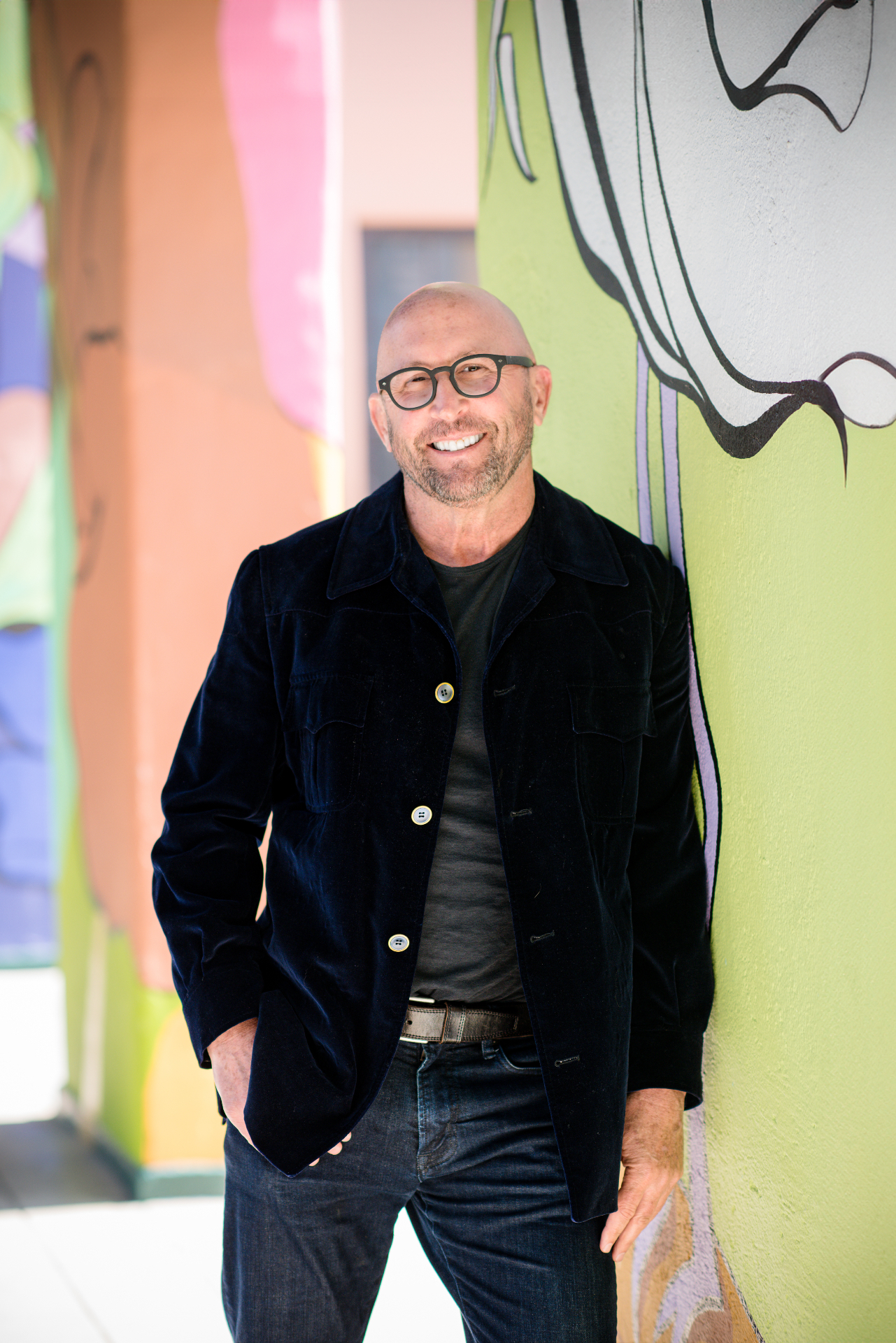
Ray Brejcha

Ray Brejcha is an executive coach. For more than twenty years he has coached CEOs, founders, and the leaders around them, across more than eight thousand paid sessions.

Before coaching, he spent twenty four years in sales and leadership, founded two companies, and carried revenue responsibility for teams of up to forty five people. He has sat in the leadership meeting, carried the number, and felt the pressure of a payroll that depends on his decisions.

For six years he was a partner at Neuberg Gore, an executive coaching firm that has worked with more than twelve hundred CEOs and their executive teams. Today he works one to one with a small number of leaders each year.

If this sounds useful, let us talk.

Apply for a conversation