RB
Ray Brejcha, Executive Coach

Executive coach · Family owned and founder led companies

The company is growing. This is coaching for the person leading it.

Private, one to one executive coaching for owners, founders, successors, and the leaders stepping into bigger seats beside them. Privately held companies, typically $10 million to $100 million in revenue.

20+ years
coaching leaders
8,000+
paid coaching sessions
36 months
average engagement
6 companies
coached through exit

Two kinds of companies I see most.

Family businesses

The founder is still in the building, the next generation is stepping up, and family members sit in seats that may not fit. Every business decision is also a family decision.

The page for family business leaders

Founder led companies scaling fast

The company has outgrown the way the owner runs it. Decisions stack up on one desk, early employees are in seats they have outgrown, and there is no outside capital to absorb a mistake.

The page for scaling companies

If any of these is the sentence in your head

The patterns I work with.

Six things leaders tell themselves. Each one is almost right.

01

The Bottleneck.

You think
I need people who care as much as I do.
But really
They stopped deciding because you kept deciding.
So if you just
Hand the decision over and stay out of it, even when you would do it differently.
Then you'll
Get your time back and a team that grows into the work.

02

The Peacekeeper.

You think
If I raise this, it will blow up the family.
But really
The conversation you avoid is already costing the business and the family.
So if you just
Say it plainly, at work, with respect.
Then you'll
Keep the relationship and the business.

03

The Proving Seat.

You think
I have to show I deserve this job.
But really
Proving is a job with no finish line.
So if you just
Lead from your own read, not from someone else's approval.
Then you'll
Be the leader in the seat, not the person auditioning for it.

04

Carrying It Alone.

You think
It is my name and my money. I have to carry it.
But really
Carried alone, it ends up in your body and at your kitchen table.
So if you just
Name what is truly yours to carry and hand back the rest.
Then you'll
Run the company without it running you.

05

The Seat That Feels Borrowed.

You think
Once I know as much as everyone else, I will feel ready.
But really
Confidence comes from leading, not from catching up.
So if you just
Lead the part of the role that is already yours, out loud.
Then you'll
Grow into the seat while you are sitting in it.

06

The Same Two People.

You think
We can keep the business and the relationship separate.
But really
The same two people walk into both rooms.
So if you just
Get clear on who decides what, at work and at home.
Then you'll
Stop having the same argument in two places.

The method

The WISC Model.

Four dimensions. One integrated leader.

Individual · External

W

Workable actions

What you do.

Covers
Habits, skills, behaviors, and results.
We work on
Follow through, delegation, the hard conversation, and where your week actually goes.

Individual · Internal

I

Internal experience

What drives what you do.

Covers
Thoughts, beliefs, emotions, identity, and mindset.
We work on
How you decide, what happens in you under pressure, and the reasons you hold on or hold back.

Collective · External

S

Systems and structures

How the company runs around you.

Covers
Roles, decision rights, org design, meetings, the numbers you watch, and the market you compete in.
We work on
The structures you lead through, the ones you keep working around, and the decisions that should not need you.

Collective · Internal

C

Culture and connection

How the team works together.

Covers
Shared values, norms, stories, and team dynamics.
We work on
What you model, the trust on your team, and the conversations your culture keeps avoiding.

Coach the right quadrant

“I need to work on my leadership.” Where, exactly?

  • W

    “You keep saying yes to things that are not yours.” A habit.

  • I

    “You know what to say, and you still do not say it.” A belief.

  • S

    “Every decision still lands on your desk.” A structure.

  • C

    “The team agrees in the meeting and does something else after.” A culture.

Clarity on the quadrant creates leverage. Confusion wastes a year.

The WISC model: a framework for integrated leadership

The WISC model draws on Ken Wilber's integral model and was refined for leadership work by Bryan Franklin. Most coaching works on one quadrant at a time. Leaders do not live in one quadrant, so the work does not either.

Holistic clarity

Sees the whole picture, not one dimension.

The right lever

Finds the change that moves the rest.

Stronger results

An aligned leader creates stronger outcomes.

Lasting impact

Builds integration that compounds.

A reframe

The way you built the company is not the way you will lead it from here.

The patterns that got you here are real. Speed, control, carrying the weight, being the one who knows. They worked. They are also the patterns most likely to be in the way of what comes next. My work is to help you see how you actually lead, keep what still serves you, and change the rest.

  • We name the pattern, not the symptom.
  • We work across all four quadrants: actions, mindset, structures, and culture.
  • We track the change in how you lead, not in a journal.
  • We meet twice a month. The work compounds across years.
  • I take on a small number of clients.

The engagement

How an engagement works.

  1. A

    The start.

    Every engagement begins with onboarding before regular coaching starts. Confidential interviews with the people around you at work and, if you choose, at home. A day watching you lead in a real meeting and a real one to one. And a clear look at the financial pressure on you and the business, because pressure shapes decisions more than most leaders admit. By the end, we share the same map.

  2. B

    The work.

    Two calls a month, built around a development plan we write together. Between months six and nine, a structured 360 review with the people you lead and live with: partners, family members in the business, direct reports, and, when it fits, your spouse. It is not an evaluation. It is a way to compare how you think you have changed with what the people around you actually experience.

  3. C

    The long arc.

    Some leaders complete the work and move on. Many stay on a lighter cadence for years: a monthly call, a yearly review. The relationship does not end. It changes shape.

What it is

Private, one to one, twice a month. About you as a leader: how you decide, delegate, and handle pressure.

What it is not

Not consulting. I will not tell you how to run your business. Not therapy, though we will talk about more than work when it matters.

Confidential

What we talk about stays between us. If someone referred you, they hear only that we are working together, and only with your permission.

Selected engagements

Twenty years of leaders, in very different rooms.

Most of these are venture backed companies you may know. The patterns I work with do not change with the cap table. A founder who cannot let go looks the same at a software company and a distribution company. The difference in a privately held business is that the stakes sit closer to home.

Selected companies whose CEOs and founders Ray has coached.

All relationships are held with full discretion.

Ray Brejcha

The pattern at the top

58%

Of CEOs now work with a coach. A decade ago it was 34%.

Stanford GSB and Hoover Rock Center CEO Coaching Survey, 2025.

5 to 7x

Median return on coaching investment among organizations that track it.

ICF and PwC Global Coaching Client Study.

13%

Of next generation family members are confident the business would run smoothly if a key family member left.

Deloitte Private, The Enduring Family Business, 2024.

58% of CEOs work with a coach.A decade ago it was 34%.

Coaching used to be what a company bought for an executive in trouble. Now it is how the strongest leaders keep their thinking sharp, with someone outside the business and outside the family.

2025 CEO Coaching Survey of 90 current and former CEOs of public and private companies. Stanford Graduate School of Business and the Hoover Institution Rock Center for Corporate Governance.

What owners want from the person on the other side of the table

  1. 01

    Someone in their corner without a stake in the outcome.

    Not a family member. Not a partner. Not someone on the payroll. Someone whose only job is to tell you the truth and stay in your corner while you decide what to do with it.

  2. 02

    Someone outside the company who has been inside dozens of others.

    Familiar enough to see what is happening. Outside enough to say what no one else will.

  3. 03

    Someone who can hold the whole picture.

    The business, the team, the family, and what the role costs you at home. The work crosses every layer because you do.

  4. 04

    Someone who is not impressed by the room.

    Not by the revenue, the title, or the name on the building. Someone interested in the person running the company.

  5. 05

    Someone whose presence makes you sharper, not smaller.

    You should leave a conversation clearer and more grounded. If you leave it depleted, you are working with the wrong person.

Voices

From the people running the room.

Three years of progress in six months. Ray held up a mirror to my actions, showed me what wasn't working, and gave me the tools to effectively lead my team.
Jake Young, CEO and Founder, FormDoctor
I have been working with Ray for over a year. When I started, I struggled to let go of early-stage founder and CEO responsibilities and patterns that held me back as a leader and, subsequently, the growth of our product and team. Ray allowed me to recognize and appreciate outdated protocols that were part of my older operating system as a leader. This mindset shift created a rapid adoption of new processes and allowed me to embrace the necessary evolution to relentlessly improve leadership as a craft.
Phil Wagner, CEO and Startup Founder
Before engaging with Ray, I felt the weight of founder isolation, struggling to find someone who understood my challenges. With Ray's guidance, I've gained practical tools to manage my reactions, particularly in high-pressure situations. I've become a more effective listener and decision-maker. Ray helped me identify and address a specific behavioral tendency, enabling me to lead with greater intention.
Charles Chau, CEO and Co-Founder, Bedrock
As CTO and Co-Founder of SEVENROOMS, I faced several key challenges: carving out time for introspection, motivating my team while delivering constructive feedback, building a high-performing management team, and establishing clear communication channels to ensure company-wide alignment. Ray's guidance helped us gain leadership clarity and improve our product development process. We're now shipping faster with increased velocity and significantly less rework.
Kinesh Patel, CTO and Co-Founder, SevenRooms

Illustrative scenarios

Two companies. One quiet pattern at the center of each.

Illustrative scenario

A second generation CEO, $40 million distribution company

Three years into the CEO seat, with her father still chairman and in the office most days. Her brother takes his questions to their father instead of her, and the same priorities have slipped two quarters in a row. The work was two conversations nobody had held, and how she shows up when she is overruled in front of the team.

Read the full scenario

Illustrative scenario

A founder and CEO, $40 million services company, 180 people

Twelve years in, no outside capital, and a president he hired eighteen months ago who still waits on him for most decisions. The work was a written agreement on who decides what, and a hard conversation with one of his first hires. He took two weeks off, and the company had one of its best months.

Read the full scenario

These scenarios are composites drawn from patterns across many engagements. They do not describe any single client.

This work is not for everyone. By design.

  1. 1

    You run a real company.

    Privately held, family owned or founder led, typically $10 million to $100 million in revenue. Real money, real people, and decisions that affect lives other than your own.

  2. 2

    The thing that built the company is starting to cost you.

    You can name it. You are tired of pretending it is fine.

  3. 3

    You want a thought partner, not a cheerleader.

    Someone outside the company and outside the family who will tell you the truth.

  4. 4

    You are willing to do the work.

    This compounds over quarters and years, at the same pace you grow the company.

If three of the four landed, we should talk.

About Ray

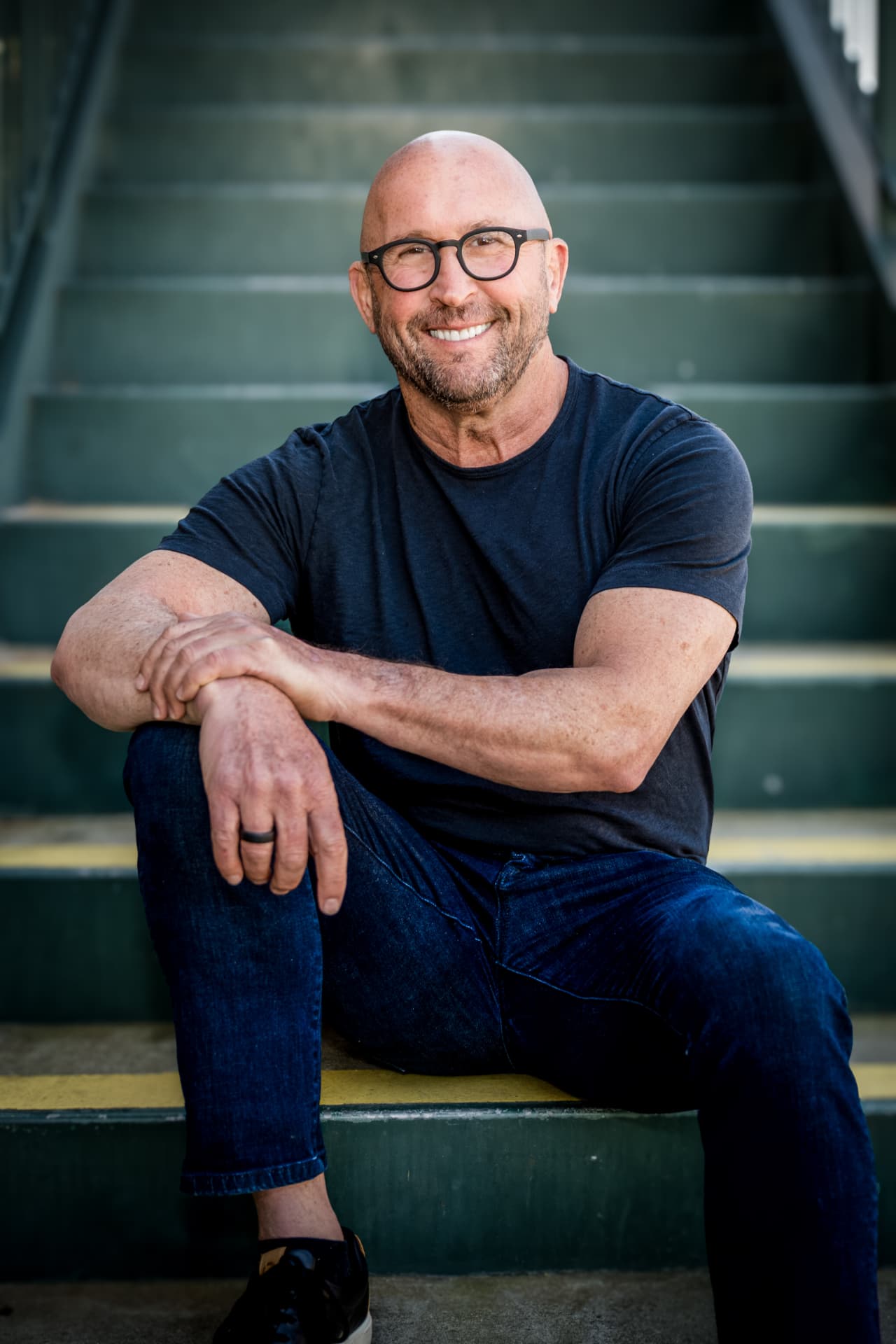
Ray Brejcha is an executive coach. For more than twenty years he has coached CEOs, founders, and the leaders around them, across more than eight thousand paid sessions.

Before coaching, he spent twenty four years in sales and leadership, founded two companies, and carried revenue responsibility for teams of up to forty five people. He has sat in the leadership meeting, carried the number, and felt the pressure of a payroll that depends on his decisions.

For six years he was a partner at Neuberg Gore, an executive coaching firm that has worked with more than twelve hundred CEOs and their executive teams. Today he works one to one with a small number of leaders each year.

Boston Marathon qualifier · Winemaker · Beekeeper · American Gladiators Contender · 34 countries visited.

Application based · Private · Selective

Start with a short questionnaire.

Eleven questions that let me understand your world before we talk. From there, a seventy five minute discovery session. If it is a clear fit, a structured engagement follows. If it is not, I will say so directly.

Apply for a conversation

Referred by an advisor? Mention their name in your application.